 |
Stealth technology also known as LOT (Low Observability Technology) is a sub-discipline of military electronic countermeasures which covers a range of techniques used with aircraft, ships and missiles, in order to make them less visible (ideally invisible) to radar, infrared and other detection methods.
The concept of stealth is not new: being able to operate without the knowledge of the enemy has always been a goal of military technology and techniques. However, as the potency of detection and interception technologies (radar, IRST, surface-to-air missiles etc.) has increased, so too has the extent to which the design and operation of military vehicles have been affected in response. A 'stealth' vehicle will generally have been designed from the outset to have reduced or controlled signature. It is possible to have varying degrees of stealth. The exact level and nature of stealth embodied in a particular design is determined by the prediction of likely threat capabilities and the balance of other considerations, including the raw unit cost of the system.
Stealth principles
Stealth technology (often referred to as "LO", for "low observability") is not a single technology but is a combination of technologies that attempt to greatly reduce the distances at which a vehicle can be detected; in particular radar cross section reductions, but also acoustic, thermal and other aspects specifically:
Radar cross-section (RCS) reductions
Main article: Radar cross section
Almost since the invention of radar, various techniques have been tried to minimize detection. Rapid development of radar during WWII led to equally rapid development of numerous counter radar measures during the period; a notable example of this was the use of chaff.
The term 'Stealth' in reference to reduced radar signature aircraft became popular during the late eighties when the F-117 stealth fighter became widely known. The first large scale (and public) use of the F-117 was during the Gulf War in 1991. However, F-117A stealth fighters were used for the first time in combat during Operation Just Cause, the United States invasion of Panama in 1989. Since then it has become less effective due to developments in the algorithms used to process the data received by radars, such as Bayesian particle filter methods. Increased awareness of stealth vehicles and the technologies behind them is prompting the development of techniques for detecting stealth vehicles, such as passive radar arrays and low-frequency radars. Many countries nevertheless continue to develop low-RCS vehicles because low RCS still offers advantages in detection range reduction as well as increasing the effectiveness of decoys against radar-seeking threats.

The possibility of designing aircraft in such a manner as to reduce their radar cross-section was recognized in the late 1930s, when the first radar tracking systems were employed, and it has been known since at least the 1960s that aircraft shape makes a very significant difference in how well an aircraft can be detected by a radar. The Avro Vulcan, a British bomber of the 1960s, had a remarkably small appearance on radar despite its large size, and occasionally disappeared from radar screens entirely. It is now known that it had a fortuitously stealthy shape apart from the vertical element of the tail. On the other hand, the Tupolev 95 Russian long range bomber (NATO reporting name 'Bear') appeared especially well on radar. It is now known that propellers and jet turbine blades produce a bright radar image; the Bear had four pairs of large (5.6 meter diameter) contra-rotating propellers.
Another important factor is the internal construction. Behind the skin of some aircraft are structures known as re-entrant triangles. Radar waves penetrating the skin of the aircraft get trapped in these structures, bouncing off the internal faces and losing energy. This approach was first used on SR-71.
The most efficient way to reflect radar waves back to the transmitting radar is with orthogonal metal plates, forming a corner reflector consisting of either a dihedral (two plates) or a trihedral (three orthogonal plates). This configuration occurs in the tail of a conventional aircraft, where the vertical and horizontal components of the tail are set at right angles. Stealth aircraft such as the F-117 use a different arrangement, tilting the tail surfaces to reduce corner reflections formed between them. The most radical approach is to eliminate the tail completely, as in the B-2 Spirit.

Planform alignment is also often used in stealth designs. Planform alignment involves using a small number of surface orientations in the shape of the structure. For example, on the F-22A Raptor, the leading edges of the wing and the tail surfaces are set at the same angle. Careful inspection shows that many small structures, such as the air intake bypass doors and the air refueling aperture, also use the same angles. The effect of planform alignment is to return a radar signal in a very specific direction away from the radar emitter rather than returning a diffuse signal detectable at many angles.
Stealth airframes sometimes display distinctive serrations on some exposed edges, such as the engine ports. The YF-23 has such serrations on the exhaust ports. This is another example in the use of re-entrant triangles and planform alignment, this time on the external airframe.
Shaping requirements have strong negative influence on the aircraft's aerodynamic properties. The F-117 has poor aerodynamics, is inherently unstable, and cannot be flown without computer assistance. Some modern anti-stealth radars target the trail of turbulent air behind it instead, much like civilian wind shear detecting radars do.
Ships have also adopted similar techniques. The Visby corvette was the first stealth ship to enter service, though the earlier Arleigh Burke class destroyer incorporated some signature-reduction features [1]. Other examples are the French La Fayette class frigate, the USS San Antonio amphibious transport dock, and most modern warship designs.
Propulsion subsystem shaping
Now in research, fluidic nozzles for thrust vectoring with aircraft jet engines, and ships, will have lower RCS, due to being less complex, mechanically simpler, with no moving parts or surfaces, and less massive (up to 50% less). They will likely be used in many unmanned aircraft, and 6th generation fighter aircraft. Fluidic nozzles divert thrust via fluid effects. Tests show that air forced into a jet engine exhaust stream can deflect thrust up to 15 degrees.
Non-metallic airframe
Dielectric composites are relatively transparent to radar, whereas electrically conductive materials such as metals and carbon fibers reflect electromagnetic energy incident on the material's surface. Composites used may contain ferrites to optimize the dielectric and magnetic properties of the material for its application.
Radar absorbing material
Radar absorbent material (RAM), often as paints, are used especially on the edges of metal surfaces. One such coating, also called iron ball paint, contains tiny spheres coated with carbonyl iron ferrite. Radar waves induce alternating magnetic field in this material, which leads to conversion of their energy into heat. Early versions of F-117A planes were covered with neoprene-like tiles with ferrite grains embedded in the polymer matrix, current models have RAM paint applied directly. The paint must be applied by robots because of problems of solvent toxicity and tight tolerances on layer thickness.
Similarly, coating the cockpit canopy with a thin film transparent conductor (vapor-deposited gold or indium tin oxide) helps to reduce the aircraft's radar profile because radar waves would normally enter the cockpit, bounce off something random (the inside of the cockpit has a complex shape), and possibly return to the radar, but the conductive coating creates a controlled shape that deflects the incoming radar waves away from the radar. The coating is thin enough that it has no adverse effect on the pilot's vision.
Radar stealth countermeasures and limitations
Low frequency radarShaping does not offer stealth advantages against low-frequency radar. If the radar wavelength is roughly twice the size of the target, a half-wave resonance effect can still generate a significant return. However, low-frequency radar is limited by lack of available frequencies which are heavily used by other systems, lack of accuracy given the long wavelength, and by the radar's size, making it difficult to transport. A long-wave radar may detect a target and roughly locate it, but not identify it, and the location information lacks sufficient weapon targeting accuracy. Noise poses another problem, but that can be efficiently addressed using modern computer technology; Chinese "Nantsin" radar and many older Soviet-made long-range radars were modified this way. It has been said that "there's nothing invisible in the radar frequency range below 2 GHz".
Multiple transmitters
Much of the stealth comes from reflecting the transmissions in a different direction other than a direct return. Therefore detection can be better achieved if the sources are spaced from the receivers, known as bistatic radar , and proposals exist to use reflections from sources such as civilian radio transmitters, including cellular telephone radio towers.
Acoustics
Acoustic stealth plays a primary role in submarine stealth as well as for ground vehicles. Submarines have extensive usage of rubber mountings to isolate and avoid mechanical noises that could reveal locations to underwater passive sonar arrays.
Early stealth observation aircraft used slow-turning propellers to avoid being heard by enemy troops below. Stealth aircraft that stay subsonic can avoid being tracked by sonic boom. The presence of supersonic and jet-powered stealth aircraft such as the SR-71 Blackbird indicates that acoustic signature is not always a major driver in aircraft design, although the Blackbird relied more on its extremely high speed and altitude.
Visibility
Most stealth aircraft use matte paint and dark colors, and operate only at night. Lately, interest on daylight Stealth (especially by the USAF) has emphasized the use of gray paint in disruptive schemes, and it is assumed that Yehudi lights could be used in the future to mask shadows in the airframe (in daylight, against the clear background of the sky, dark tones are easier to detect than light ones) or as a sort of active camouflage. The B-2 has wing tanks for a contrail-inhibiting chemical, alleged by some to be chlorofluorosulphonic acid, and mission planning also considers altitudes where the probability of their formation is minimized.
Infrared
An exhaust plume contributes a significant infrared (IR) signature. One means of reducing the IR signature is to have a non-circular tail pipe (a slit shape) in order to minimize the exhaust cross-sectional volume and maximize the mixing of the hot exhaust with cool ambient air. Often, cool air is deliberately injected into the exhaust flow to boost this process. Sometimes, the jet exhaust is vented above the wing surface in order to shield it from observers below, as in the B-2 Spirit, and the unstealthy A-10 Thunderbolt II. To achieve infrared stealth, the exhaust gas is cooled to the temperatures where the brightest wavelengths it radiates on are absorbed by atmospheric carbon dioxide and water vapor, dramatically reducing the infrared visibility of the exhaust plume. Another way to reduce the exhaust temperature is to circulate coolant fluids such as fuel inside the exhaust pipe, where the fuel tanks serve as heat sinks cooled by the flow of air along the wings.
Reducing radio frequency (RF) emissions
In addition to reducing infrared and acoustic emissions, a stealth vehicle must avoid radiating any other detectable energy, such as from onboard radars, communications systems, or RF leakage from electronics enclosures. The F-117 uses passive infra-red and "low light level TV" sensor systems to aim its weapons and the F-22 Raptor has an advanced LPI radar which can illuminate enemy aircraft without triggering a radar warning receiver response.
Measuring stealth
The size of a target's image on radar is measured by the radar cross section or RCS, often represented by the symbol σ and expressed in square meters. This does not equal geometric area. A perfectly conducting sphere of projected cross sectional area 1 m2 (ie a diameter of 1.13 m) will have an RCS of 1 m2. Note that for radar wavelengths much less than the diameter of the sphere, RCS is independent of frequency. Conversely, a square flat plate of area 1 m2 will have an RCS of σ = 4π A2 / λ2 (where A=area, λ=wavelength), or 13,982 m2 at 10 GHz if the radar is perpendicular to the flat surface. At off-normal incident angles, energy is reflected away from the receiver, reducing the RCS. Modern stealth aircraft are said to have an RCS comparable with small birds or large insects, though this varies widely depending on aircraft and radar.
If the RCS was directly related to the target's cross-sectional area, the only way to reduce it would be to make the physical profile smaller. Rather, by reflecting much of the radiation away or absorbing it altogether, the target achieves a smaller radar cross section.
Stealth tactics
Stealthy strike aircraft such as the F-117, designed by Lockheed Martin's famous Skunk Works, are usually used against heavily defended enemy sites such as Command and Control centers or surface-to-air missile (SAM) batteries. Enemy radar will cover the airspace around these sites with overlapping coverage, making undetected entry by conventional aircraft nearly impossible. Stealthy aircraft can also be detected, but only at short ranges around the radars, so that for a stealthy aircraft there are substantial gaps in the radar coverage. Thus a stealthy aircraft flying an appropriate route can remain undetected by radar. Many ground-based radars exploit Doppler filter to improve sensitivity to objects having a radial velocity component with respect to the radar. Mission planners use their knowledge of the enemy radar locations and the RCS pattern of the aircraft to design a flight path that minimizes radial speed while presenting the lowest-RCS aspects of the aircraft to the threat radar. In order to be able to fly these "safe" routes, it is necessary to understand the enemy's radar coverage (see Electronic Intelligence). Mobile radars such as AWACS can complicate matters.
For Example :
B-2 Stealth Bomber

The ‘flying wing’ shaped Stealth Bomber (nicknamed ‘Spirit’) is a unique aircraft that’s designed to make it as invisible as possible. Its shape means there are very few leading edges for radar to reflect from, reducing its signature dramatically. This is further enhanced by the composite materials from which the aircraft is constructed and the coatings on its surface. These are so successful that despite having a 172-foot wingspan, the B-2’s radar signature is an astounding 0.1 square metres.
The B-2’s stealth capabilities, and aerodynamic shape, are further enhanced by the fact its engines are buried inside the wing. This means the induction fans at the front of the engines are concealed while the engine exhaust is minimised. As a result, the B-2’s thermal signature is kept to the bare minimum, making it harder for thermal sensors to detect the bomber as well as lowering the aircraft’s acoustic footprint.
The design also means the B-2 is both highly aerodynamic and fuel efficient. The B-2’s maximum range is 6,000 nautical miles and as a result the aircraft has often been used for long-range missions, some lasting 30 hours and in one case, 50. The B-2 is so highly automated that it’s possible for a single crew member to fl y while the other sleeps, uses the lavatory or prepares a hot meal and this combination of range and versatility has meant the aircraft has been used to research sleep cycles to improve crew performance on long-range missions. Despite this, the aircraft’s success comes with a hefty price tag. Each B-2 costs $737 million and must be kept in a climate-controlled hangar to make sure the stealth materials remain intact. These problems aside though, the Spirit is an astonishing aircraft, even if, chances are, you won’t see one unless the pilots want you to…
Inside the SpiritThe B-2 is an unusual combination of complexity and elegance, the entire airframe built around the concept of stealth and focused on making the aircraft as hard to detect as possible.

Windows
The B-2′s windows have a fine wire mesh built into them, designed to scatter radar.
Composite materials
Any radar returns are reduced by the composite materials used, which further deflect any signals.
Carbon-reinforced plastic
Special heat-resistant material near the exhausts mean the airframe absorbs very little heat.
Rotary launch assembly (RLA)
The RLA allows the B-2 to deploy different weapons in quick succession.
Bomb rack assembly (BRA)
The bomb rack assembly can hold up to eighty 500lb bombs.
Air Intakes
To further reduce the B-2′s signature, the engine intakes are sunk into the main body.

Landing gear doors
The landing gear doors are hexagonal to further break up the B-2′s radar profile.
Crew compartment
The B-2 carries two crew, a pilot and a mission commander with room for a third if needed.
Flying wing
The B-2′s shape means it has very few leading edges, making it harder to detect on radar.
Fly-by-wire
The B-2′s unique shape makes it unstable, and it relies on a computer to stabilise it and keep it flying.
Engines
The B-2′s four General Electric F118s don’t have afterburners as the heat these generate would make the aircraft easier to detect.
The Statistics

Manufacturer
Northrop Grumman
Year first deployed
1993
Dimensions
Length: 69ft
Wingspan: 172ft
Height: 17ft
Weight empty / max
158,000lb / 336,500lb
Unit cost
$737,000,000
Max speed
Mach 0.95 (604mph)
Propulsion
General Electric F118-GE-100 non-afterburning turbofans
Max altitude
50,000ft
============+++=============

Sunday, May 1, 2011
All about optical industry and Communication
Posted by: , 0 commentshttp://www.fileserve.com/file/m4KvH48
http://www.fileserve.com/file/anDuZWp
http://www.fileserve.com/file/PfnrQGV
http://www.fileserve.com/file/hnVD2Uj
http://www.fileserve.com/file/MauwsSv
http://www.fileserve.com/file/vWN8a8X
http://www.fileserve.com/file/24QKs8D
http://www.fileserve.com/file/MqEbuMA
http://www.fileserve.com/file/UBPhtAR
http://www.fileserve.com/file/HnUyTzJ
http://www.fileserve.com/file/ZFWaYU9
http://www.fileserve.com/file/Cqp4PpB
http://www.fileserve.com/file/7M3W46f
http://www.fileserve.com/file/t4Ub6Va

------------------------------++++---------


1. Optical Fiber Communications (by Gerd Keiser)


2. Wireless Optical Communication Systems


3. Understanding Optical Communications


4. Practical Fiber Optics


5. Optical Fiber Communications (by J.M.Senior)


6. Optical WDM Networks


7. Optical Networks - A practical Perspective


8. Optical Network Control Architecture, Protocols, and Standards


9. Fundamentals of Photonics


10. Fiber Optic Sensors


11. Fiber-Optic Communication Systems


12. Fiber Optic Data Communication - Technological Trends and Advances


13. Broadband Optical Access Networks and Fiber-to-the-Home Systems Technologies and Deployment Strategies

==================++++================================
Thursday, April 28, 2011
مقارنة بين حجم أكبر أربع طائرات
Posted by: , 0 comments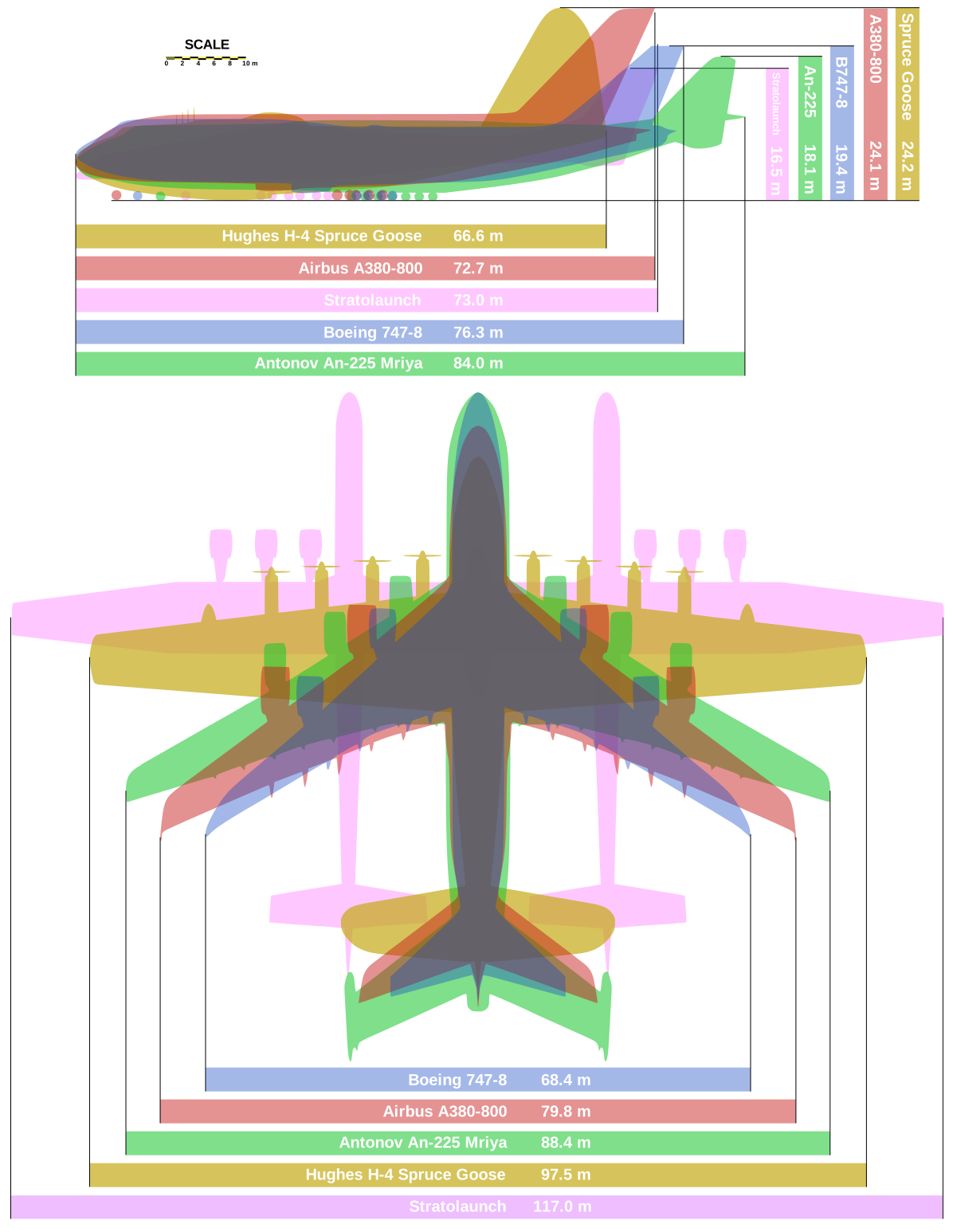
Sunday, April 24, 2011
الفرق بين 64bit,32bit و Operating Systems
Posted by: , 0 commentsوقد بدأ هذا التحول لتقنية 64 بت تحديداً في سبتمبر عام 2003 مع طرح معالج AMD Athlon 64 مع إصدار بيتا من Windows XP 64-Bit، ثم تم طرح ويندوز إكس بي 64 بت بالإصدار RC2 الذي طرح مع معالجات إنتل بنتيوم 64 والمشار إليها بتقنية EM64T، ثم معالجات الكمبيوتر الدفتري AMD Turion،ومعالجات ثنائية النواة Pentium D
لن يتيح ويندوز إكس بي 64 بت الترقية من الإصدارات القديمة من ويندوز بما فيها ويندوز اكس بي، بل يتطلب تثبيتا كاملاً على هارد خالي من أية معلومات .
وعند الطرح الرسمي لـ Windows XP Pro 64bit فلن تستفيد منه فعلياً إلا التطبيقات التي تم تصميمها لتقدم تحسنا في الأداء .
كما أنه 64bit يتولى معالجة كميات أكبر من البيانات بدرجات ملحوظة مثل الألعاب والفيديو والصوت. ولذلك فإن مايكروسوفت شرعت في تحفيز المطورين لتحويل برامجهم الحالية والقادمة إلى منصة 64 بت .. مع العلم أن واجهة التطبيق في كل من ويندوز 32 بت وويندوز 64 بت هي ذاتها، وستطرح مايكروسوفت أداة البرمجة Visual Studio 2005 (Whidbey)، و Virtual PC 2004 Service Pack 2
يحقق ويندوز 64 بت توافقه مع تطبيقات ويندوز 32 بت من خلال ميزة المحاكاة التي تدعى Windows-32-on-Windows-64 (WOW64) وهي طبقة محاكاة تؤمن توافقا بين الفروقات فيهما خاصة تلك المرتبطة بالاتصال بين العمليات المشتركة وهناك أيضا أداة توجيه السجل registry redirector، حيث يوجد في ويندوز 64 بت فرعين منفصلين في السجل لمفتاح HKEY_LOCAL_MACHINE\Software،
الأولى تستخدمها تطبيقات 64 بت الأصيلة والثانية لتطبيقات 32 بت ليتاح للأخيرة التعرف على المصادر والنظام وكأنه ويندوز 32 بت، دون أن تتعرف على تبدلات في أجهزة 64 بت.
وعادة ما تستخد\م تطبيقات 64 بت وحدها دليل c:\Program Files، بينما يتم تثبيت تطبيقات 32 بت في الدليل c:\Program Files (x86)".، ومن المفيد معرفة ذلك
بدآت التطبيقات التعامل الفعلي مع إصدار 64 بت مثل اللألعاب والبرامج ومضادات الفيروسات وغيرها .. كما تم إصدار أوفيس يعمل بـ 64 بت من مايكروسوفت .
أما كروت الشاشة مثل نفيديا وATI والوسائط الأخرى مثل كروت الصوت والموديوم وغيرها من عتاد الجهاز فقد بدأت بتقديم بعض برامج تتوافق مع نظام التشغيل 64 بت.
تقلص الذاكرة الأكبر عملية قراءة البيانات من القرص الصلب (input/output- read/writes) كما تسرع الوصول إلى البيانات ومعالجتها. ولذلك تستفيد من حوسبة 64 بت التطبيقات التي تستدعي تعاملات كثيفة في البيانات مثل قواعد البيانات والتطبيقات الكبيرة إلى جانب الألعاب ثلاثية الأبعاد والفيديو والرسوم .
قدمت كل من Intel وAMD معالجات بدعم مزدوج لبرامج 32 و64 بت
وكذلك هو حال نظام تشغيل مايكروسوفت. لكن مايكروسوفت تخلت عن دعم الدوس وبرامج 16 بت بصورة كلية في نظام التشغيل الجديد .
وقد غابت عن هذا الإصدار النهائية كل من النظام الثانوي Windows on Windows (WOW)، وآلة ويندوز الافتراضية Windows Virtual Machine (VM)، اللتان تدعمان تشغيل دوس وبرامج ويندوز القديمة من فئة 16 بت، وبذلك لن يتاح تشغيل هذه نهائيا .
ويمكن التعامل بين تطبيقات 32 بت وتطبيقات 64 بت من خلال عمليات القص والنسخ
ولكن بطبيعة الحال عمليات 32 بت لا يمكنها استدعاء مكتبات 64 بت ، وكذلك لا يمكن لعمليات 64 بت استدعاء مكتبات 32 بت.
ستستفيد التطبيقات التي تعتمد على الكتابة والقراءة من القرص بمقدار خمسين ضعفا في سرعة أدائها. كما تخلت مايكروسوفت هنا عن بعض بروتوكولات الشبكة التي يندر استخدامها مثل NetBEUI و AppleTalk و IPX وspx كما أن العديد من برامج 32 بت التي تعتمد على أدوات تثبيت قديمة من فئة 16 بت بما فيها برامج مايكروسوفت مثل Photo Story 3 و Windows XP PowerToys لن تعمل في الإصدار النهائي. عدا عن ذلك فإن معظم برامج 32 بت ستعمل دون مشاكل إلا من بعض العقبات البسيطة .
أما مشاكل الأجهزة فهي تتلخص في أن معظم المشغلات من نوع 32 بت لن تعمل أيضا.
ويوجد إنترنت إكسبلورر إصدار آخر خاص بالـ 64 بت ، إضافة للإصدار الحالي 32 بت .
التطور ينعكس إيجاباً على عمل الجهاز والإستفادة القصوى من إمكاناته وقدراته خاصة في التطبيقات الضخمة مثل مونتاج الفيديو والجرافيكس وحتى الألعاب .
فلم يكن يتخيل أحد خلال بداية التسعينات أن يصل جهاز الكمبيوتر إلى ما وصل له حالياً , فبإمكان المستخدم حالياً عمل مونتاج للفيديو على جهازه إضافة إلى الألعاب التي تحاكي جزءاً من الواقع كالسرعة والمؤثرات الأقرب للواقعية .
ساهم بذلك التطور التقني الذي رافقه تطور في البرمجة .
المعالجات الداعمة لـ 64 بت متوفرة .. ولكن بقي الاعتماد الفعلي على تقنية 64 بت، ولكن مع توفر نظام التشغيل والبرامج التي تدعم حوسبة 64،
الذاكرة من أهم فوائد بيئة 64 بت. حيث يمكن لمعالج 64 بت أن يتعامل مع بيانات وتعليمات بوحدات من 64 بت خلال كل دورة لساعة المعالج، كما أنه يصبح قادرا على التعامل مع سعة كبيرة من الذاكرة لمعالجة عمليات أكبر من معالج يعتمد على 32 بت لكل دورة .
لا يتقيد ويندوز إكس بي 64 بت، بحدود الذاكرة المفروضة كـ 4 جيجابايت كما في ويندوز إكس بي السابق، بل يتيح سعة ضخمة تصل لغاية 32 غيغابايت .. وذاكرة افتراضية بسعة 512 تيرابايت ويعتمد ذلك على دعم اللوحة الأم .
تتيح سعة الذاكرة الضخمة الحصول على سرعة أكبر بصورة مذهلة في تشغيل بعض المهام
يتميز كذلك بقدرات جيدة في المحافظة على البيانات النشطة واللازمة في ذاكرة النظام العشوائية
وكلما قدمت المزيد من الذاكرة لهذه الأنظمة كلما ساهمت بالإحتفاظ بحجم بيانات أكبر لسرعة إستدعائها ، وتعد أسرع بآلاف المرات من القرص الصلب الذي يحتاج لعمليات ميكانيكية لجلب المعلومات .
مع العلم أن الذاكرة الافتراضية للقرص الصلب ذات سرعة أقل من الذاكرة العشوائية، وكل شيء لا تتسع له الذاكرة العشوائية سيتحول إلى الذاكرة الافتراضية على القرص الصلب.
إضافة إلى أن ويندوز يقوم بتشغيل البرامج بسرعة أكبر في الذاكرة العشوائية عند توفر سعة كافية منها، وبالتالي ستقدم ميزة الذاكرة ذات السعة الأكبر سرعة أكبر.
لم يعد هناك دعم لبرامج 16 بت بحيث لن يكون بالإمكان تشغيلها بأي شكل. ويبدو ظاهريا أن ويندوز 64 بت أشبه بويندوز إكس بي إصدار المحترفين مع الترقية SP2 باختلافات بسيطة، فهناك إصدار إنترنت إكسبلورر 64 بت وآخر بإصدار 32 بت بهدف تأمين التوافق إلا أن الملحقات التي تضاف إليه لن تعمل. ينطبق هذا على مشغلات الأجهزة DRIVERS، حيث لا يتوفر إلا عدد محدود من هذه.
صمم ويندوز إكس بي للمحترفين بفئة 64 بت لتلبية المتطلبات العالية للأداء .
ولمن يتطلب عملهم سعة كبيرة من الذاكرة وأداء قويا في مجالات التصميم وتحرير الفيديو الجرافيكس إضافة للألعاب ومحطات العمل المختلفة حيث يتم توفير الوقت . ويتيح لهم نظام التشغيل العمل بنماذج مكتملة ثلاثية الأبعاد بدلا من نماذج متمثلة تسمى wire frame representation، مع القدرة على المعاينة والعمل فيها مباشرة .
أما بالنسبة للألعاب فيعتبر ذات الشيء بالنسبة للألعاب ذات المتطلبات العالية التي لا تلبيها هندسة 32 بت حاليا حيث سيكون المجال أكثر رحابه لمصممي الألعاب ومطوريها .
ويوفر ويندوز 64 بت دعما لذاكرة بسعة 128 غيغابايت مع 16 تيرابايت للذاكرة الافتراضية لتسريع معالجة البيانات بصورة غير مسبوقة.
يؤمن إصدار ويندوز 64 بت دعم برامج 32 بت من خلال طبقة المحاكاة Windows on Windows 64 (WOW64) x86 emulation layer التي تعزل عمليات 32 بت عن عمليات 64 بت. وتظهر عمليات 32 بت في مدير المهام مع علامة نجمة فوقها (*32). ومن المشاكل التي يمكن أن يواجهها
مواضيع عديدة قمت بالسابق بذكرها حول هذه التقنية والبرامج الداعمة لها ستجد بعضها في الروابط التالية :
هل ستستخدم رامات بحجم واحد تيرابايت
======+++======
Thursday, April 21, 2011
Comparison of Live Hotmail, Gmail and Yahoo Mail
Posted by: , 0 comments
The three applications, along with AOL mail, make up the vast majority of the 500 million or so webmail users around the world (see chart included in this post). Most of these users are still using the old, tedious, Ajax-free Yahoo Mail and Hotmail user interfaces, requiring page refreshes for every click. The new applications, along with Gmail, offer a much richer experience, much like Outlook or Mac mail. When these webmail clients are performing well, their speed and ease of use is easily as good as a desktop client.
Overall we prefer Gmail over all other webmail applications because performance (speed) is consistently fast, and emails can be tagged making search much more effective. They also offer more storage and other features, and it’s free. However, Yahoo and Live Hotmail offer more mainstream Outlook-like user interfaces (although Live Hotmail does not allow you to access other email accounts from their application), whereas Gmail takes some time to get used to. If you are looking for speed and tagging is important, Gmail is for you. If you are looking for the closest thing to Outlook online, go with Yahoo Mail.
The following chart compares the services on a feature-by-feature basis. Note that the user numbers for Yahoo and Hotmail include legacy users still on the old platforms.

Gmail
Gmail groups emails in a thread into a single line in the inbox. Some users love this, others hate it. It’s not my favorite feature, but I’ve gotten used to it. The best Gmail feature in my opinion is the ability to tag emails for better organization and search. None of the other services offer this. Gmail also has integrated Gtalk into the GMail interface, and continues to add other functionality as well (such as integration with Docs & Spreadsheets). Gmail is consistently fast, offers the most storage and free POP-in and POP-out, meaning you can use Gmail to access your other email accounts, or access GMail from whatever email client you use. It’s a near-perfect piece of software, and has only occasional hiccups. The fact that Google is paired with Google Calendar, the best online Calendar application, doesn’t hurt, either.
Windows Live Hotmail
The new Windows Live Hotmail will be a welcome change to Microsoft’s 228 million webmail users, but it falls short of the Yahoo and Gmail offerings. They offer 2 GB of storage, better than Yahoo, but there are no POP-in or POP-out features at all. If you want to access your account outside of the web site, you have to do it via Outlook or Outlook Express. It remains the slowest among the three in our tests.
Yahoo Mail
Yahoo Mail is very good, allowing users to access other email accounts (POP-in), but only offering POP-out access for an additional fee. This is probably due to the legacy users who are already paying for this feature – Yahoo may not want to give up this revenue stream. Storage is on the low side – only 1 GB, which is less than half of what Gmail offers. Still, Yahoo Mail has recently been running very fast and offers an intuitive, Outlook-like interface. Instant Messaging and RSS integration is awesome.
++++==++++


