Ads 230 x 230
Thursday, April 28, 2011
Sunday, April 24, 2011
الفرق بين 64bit,32bit و Operating Systems
Posted by: , 0 commentsوقد بدأ هذا التحول لتقنية 64 بت تحديداً في سبتمبر عام 2003 مع طرح معالج AMD Athlon 64 مع إصدار بيتا من Windows XP 64-Bit، ثم تم طرح ويندوز إكس بي 64 بت بالإصدار RC2 الذي طرح مع معالجات إنتل بنتيوم 64 والمشار إليها بتقنية EM64T، ثم معالجات الكمبيوتر الدفتري AMD Turion،ومعالجات ثنائية النواة Pentium D
لن يتيح ويندوز إكس بي 64 بت الترقية من الإصدارات القديمة من ويندوز بما فيها ويندوز اكس بي، بل يتطلب تثبيتا كاملاً على هارد خالي من أية معلومات .
وعند الطرح الرسمي لـ Windows XP Pro 64bit فلن تستفيد منه فعلياً إلا التطبيقات التي تم تصميمها لتقدم تحسنا في الأداء .
كما أنه 64bit يتولى معالجة كميات أكبر من البيانات بدرجات ملحوظة مثل الألعاب والفيديو والصوت. ولذلك فإن مايكروسوفت شرعت في تحفيز المطورين لتحويل برامجهم الحالية والقادمة إلى منصة 64 بت .. مع العلم أن واجهة التطبيق في كل من ويندوز 32 بت وويندوز 64 بت هي ذاتها، وستطرح مايكروسوفت أداة البرمجة Visual Studio 2005 (Whidbey)، و Virtual PC 2004 Service Pack 2
يحقق ويندوز 64 بت توافقه مع تطبيقات ويندوز 32 بت من خلال ميزة المحاكاة التي تدعى Windows-32-on-Windows-64 (WOW64) وهي طبقة محاكاة تؤمن توافقا بين الفروقات فيهما خاصة تلك المرتبطة بالاتصال بين العمليات المشتركة وهناك أيضا أداة توجيه السجل registry redirector، حيث يوجد في ويندوز 64 بت فرعين منفصلين في السجل لمفتاح HKEY_LOCAL_MACHINE\Software،
الأولى تستخدمها تطبيقات 64 بت الأصيلة والثانية لتطبيقات 32 بت ليتاح للأخيرة التعرف على المصادر والنظام وكأنه ويندوز 32 بت، دون أن تتعرف على تبدلات في أجهزة 64 بت.
وعادة ما تستخد\م تطبيقات 64 بت وحدها دليل c:\Program Files، بينما يتم تثبيت تطبيقات 32 بت في الدليل c:\Program Files (x86)".، ومن المفيد معرفة ذلك
بدآت التطبيقات التعامل الفعلي مع إصدار 64 بت مثل اللألعاب والبرامج ومضادات الفيروسات وغيرها .. كما تم إصدار أوفيس يعمل بـ 64 بت من مايكروسوفت .
أما كروت الشاشة مثل نفيديا وATI والوسائط الأخرى مثل كروت الصوت والموديوم وغيرها من عتاد الجهاز فقد بدأت بتقديم بعض برامج تتوافق مع نظام التشغيل 64 بت.
تقلص الذاكرة الأكبر عملية قراءة البيانات من القرص الصلب (input/output- read/writes) كما تسرع الوصول إلى البيانات ومعالجتها. ولذلك تستفيد من حوسبة 64 بت التطبيقات التي تستدعي تعاملات كثيفة في البيانات مثل قواعد البيانات والتطبيقات الكبيرة إلى جانب الألعاب ثلاثية الأبعاد والفيديو والرسوم .
قدمت كل من Intel وAMD معالجات بدعم مزدوج لبرامج 32 و64 بت
وكذلك هو حال نظام تشغيل مايكروسوفت. لكن مايكروسوفت تخلت عن دعم الدوس وبرامج 16 بت بصورة كلية في نظام التشغيل الجديد .
وقد غابت عن هذا الإصدار النهائية كل من النظام الثانوي Windows on Windows (WOW)، وآلة ويندوز الافتراضية Windows Virtual Machine (VM)، اللتان تدعمان تشغيل دوس وبرامج ويندوز القديمة من فئة 16 بت، وبذلك لن يتاح تشغيل هذه نهائيا .
ويمكن التعامل بين تطبيقات 32 بت وتطبيقات 64 بت من خلال عمليات القص والنسخ
ولكن بطبيعة الحال عمليات 32 بت لا يمكنها استدعاء مكتبات 64 بت ، وكذلك لا يمكن لعمليات 64 بت استدعاء مكتبات 32 بت.
ستستفيد التطبيقات التي تعتمد على الكتابة والقراءة من القرص بمقدار خمسين ضعفا في سرعة أدائها. كما تخلت مايكروسوفت هنا عن بعض بروتوكولات الشبكة التي يندر استخدامها مثل NetBEUI و AppleTalk و IPX وspx كما أن العديد من برامج 32 بت التي تعتمد على أدوات تثبيت قديمة من فئة 16 بت بما فيها برامج مايكروسوفت مثل Photo Story 3 و Windows XP PowerToys لن تعمل في الإصدار النهائي. عدا عن ذلك فإن معظم برامج 32 بت ستعمل دون مشاكل إلا من بعض العقبات البسيطة .
أما مشاكل الأجهزة فهي تتلخص في أن معظم المشغلات من نوع 32 بت لن تعمل أيضا.
ويوجد إنترنت إكسبلورر إصدار آخر خاص بالـ 64 بت ، إضافة للإصدار الحالي 32 بت .
التطور ينعكس إيجاباً على عمل الجهاز والإستفادة القصوى من إمكاناته وقدراته خاصة في التطبيقات الضخمة مثل مونتاج الفيديو والجرافيكس وحتى الألعاب .
فلم يكن يتخيل أحد خلال بداية التسعينات أن يصل جهاز الكمبيوتر إلى ما وصل له حالياً , فبإمكان المستخدم حالياً عمل مونتاج للفيديو على جهازه إضافة إلى الألعاب التي تحاكي جزءاً من الواقع كالسرعة والمؤثرات الأقرب للواقعية .
ساهم بذلك التطور التقني الذي رافقه تطور في البرمجة .
المعالجات الداعمة لـ 64 بت متوفرة .. ولكن بقي الاعتماد الفعلي على تقنية 64 بت، ولكن مع توفر نظام التشغيل والبرامج التي تدعم حوسبة 64،
الذاكرة من أهم فوائد بيئة 64 بت. حيث يمكن لمعالج 64 بت أن يتعامل مع بيانات وتعليمات بوحدات من 64 بت خلال كل دورة لساعة المعالج، كما أنه يصبح قادرا على التعامل مع سعة كبيرة من الذاكرة لمعالجة عمليات أكبر من معالج يعتمد على 32 بت لكل دورة .
لا يتقيد ويندوز إكس بي 64 بت، بحدود الذاكرة المفروضة كـ 4 جيجابايت كما في ويندوز إكس بي السابق، بل يتيح سعة ضخمة تصل لغاية 32 غيغابايت .. وذاكرة افتراضية بسعة 512 تيرابايت ويعتمد ذلك على دعم اللوحة الأم .
تتيح سعة الذاكرة الضخمة الحصول على سرعة أكبر بصورة مذهلة في تشغيل بعض المهام
يتميز كذلك بقدرات جيدة في المحافظة على البيانات النشطة واللازمة في ذاكرة النظام العشوائية
وكلما قدمت المزيد من الذاكرة لهذه الأنظمة كلما ساهمت بالإحتفاظ بحجم بيانات أكبر لسرعة إستدعائها ، وتعد أسرع بآلاف المرات من القرص الصلب الذي يحتاج لعمليات ميكانيكية لجلب المعلومات .
مع العلم أن الذاكرة الافتراضية للقرص الصلب ذات سرعة أقل من الذاكرة العشوائية، وكل شيء لا تتسع له الذاكرة العشوائية سيتحول إلى الذاكرة الافتراضية على القرص الصلب.
إضافة إلى أن ويندوز يقوم بتشغيل البرامج بسرعة أكبر في الذاكرة العشوائية عند توفر سعة كافية منها، وبالتالي ستقدم ميزة الذاكرة ذات السعة الأكبر سرعة أكبر.
لم يعد هناك دعم لبرامج 16 بت بحيث لن يكون بالإمكان تشغيلها بأي شكل. ويبدو ظاهريا أن ويندوز 64 بت أشبه بويندوز إكس بي إصدار المحترفين مع الترقية SP2 باختلافات بسيطة، فهناك إصدار إنترنت إكسبلورر 64 بت وآخر بإصدار 32 بت بهدف تأمين التوافق إلا أن الملحقات التي تضاف إليه لن تعمل. ينطبق هذا على مشغلات الأجهزة DRIVERS، حيث لا يتوفر إلا عدد محدود من هذه.
صمم ويندوز إكس بي للمحترفين بفئة 64 بت لتلبية المتطلبات العالية للأداء .
ولمن يتطلب عملهم سعة كبيرة من الذاكرة وأداء قويا في مجالات التصميم وتحرير الفيديو الجرافيكس إضافة للألعاب ومحطات العمل المختلفة حيث يتم توفير الوقت . ويتيح لهم نظام التشغيل العمل بنماذج مكتملة ثلاثية الأبعاد بدلا من نماذج متمثلة تسمى wire frame representation، مع القدرة على المعاينة والعمل فيها مباشرة .
أما بالنسبة للألعاب فيعتبر ذات الشيء بالنسبة للألعاب ذات المتطلبات العالية التي لا تلبيها هندسة 32 بت حاليا حيث سيكون المجال أكثر رحابه لمصممي الألعاب ومطوريها .
ويوفر ويندوز 64 بت دعما لذاكرة بسعة 128 غيغابايت مع 16 تيرابايت للذاكرة الافتراضية لتسريع معالجة البيانات بصورة غير مسبوقة.
يؤمن إصدار ويندوز 64 بت دعم برامج 32 بت من خلال طبقة المحاكاة Windows on Windows 64 (WOW64) x86 emulation layer التي تعزل عمليات 32 بت عن عمليات 64 بت. وتظهر عمليات 32 بت في مدير المهام مع علامة نجمة فوقها (*32). ومن المشاكل التي يمكن أن يواجهها
مواضيع عديدة قمت بالسابق بذكرها حول هذه التقنية والبرامج الداعمة لها ستجد بعضها في الروابط التالية :
هل ستستخدم رامات بحجم واحد تيرابايت
======+++======
Thursday, April 21, 2011
Comparison of Live Hotmail, Gmail and Yahoo Mail
Posted by: , 0 commentsThe three applications, along with AOL mail, make up the vast majority of the 500 million or so webmail users around the world (see chart included in this post). Most of these users are still using the old, tedious, Ajax-free Yahoo Mail and Hotmail user interfaces, requiring page refreshes for every click. The new applications, along with Gmail, offer a much richer experience, much like Outlook or Mac mail. When these webmail clients are performing well, their speed and ease of use is easily as good as a desktop client.
Overall we prefer Gmail over all other webmail applications because performance (speed) is consistently fast, and emails can be tagged making search much more effective. They also offer more storage and other features, and it’s free. However, Yahoo and Live Hotmail offer more mainstream Outlook-like user interfaces (although Live Hotmail does not allow you to access other email accounts from their application), whereas Gmail takes some time to get used to. If you are looking for speed and tagging is important, Gmail is for you. If you are looking for the closest thing to Outlook online, go with Yahoo Mail.
The following chart compares the services on a feature-by-feature basis. Note that the user numbers for Yahoo and Hotmail include legacy users still on the old platforms.
Gmail
Gmail groups emails in a thread into a single line in the inbox. Some users love this, others hate it. It’s not my favorite feature, but I’ve gotten used to it. The best Gmail feature in my opinion is the ability to tag emails for better organization and search. None of the other services offer this. Gmail also has integrated Gtalk into the GMail interface, and continues to add other functionality as well (such as integration with Docs & Spreadsheets). Gmail is consistently fast, offers the most storage and free POP-in and POP-out, meaning you can use Gmail to access your other email accounts, or access GMail from whatever email client you use. It’s a near-perfect piece of software, and has only occasional hiccups. The fact that Google is paired with Google Calendar, the best online Calendar application, doesn’t hurt, either.
Windows Live Hotmail
The new Windows Live Hotmail will be a welcome change to Microsoft’s 228 million webmail users, but it falls short of the Yahoo and Gmail offerings. They offer 2 GB of storage, better than Yahoo, but there are no POP-in or POP-out features at all. If you want to access your account outside of the web site, you have to do it via Outlook or Outlook Express. It remains the slowest among the three in our tests.
Yahoo Mail
Yahoo Mail is very good, allowing users to access other email accounts (POP-in), but only offering POP-out access for an additional fee. This is probably due to the legacy users who are already paying for this feature – Yahoo may not want to give up this revenue stream. Storage is on the low side – only 1 GB, which is less than half of what Gmail offers. Still, Yahoo Mail has recently been running very fast and offers an intuitive, Outlook-like interface. Instant Messaging and RSS integration is awesome.
++++==++++
Network Basic Security Essentials
Posted by: , 0 commentsComputer security is the process of preventing and detecting unauthorized use of your computer. Prevention measures help you to stop unauthorized users (also known as “intruders”) from accessing any part of your computer system. Network security involves all activities that organizations, enterprises, and institutions undertake to protect the value and ongoing usability of assets and the integrity and continuity of operations. An effective network security strategy requires identifying threats and then choosing the most effective set of tools to combat them.
Network Security Threats
- Viruses : Computer programs written by devious programmers and designed to replicate themselves and infect computers when triggered by a specific event
- Trojan horse programs : Delivery vehicles for destructive code, which appear to be harmless or useful software programs such as games
- Vandals : Software applications or applets that cause destruction
- Attacks : Including reconnaissance attacks (information-gathering activities to collect data that is later used to compromise networks); access attacks (which exploit network vulnerabilities in order to gain entry to e-mail, databases, or the corporate network); and denial-of-service attacks (which prevent access to part or all of a computer system)
- Data interception : Involves eavesdropping on communications or altering data packets being transmitted
- Social engineering : Obtaining confidential network security information through nontechnical means, such as posing as a technical support person and asking for people’s passwords
In the field of networking, the area of network security consists of the provisions and policies adopted by the network administrator to prevent and monitor unauthorized access, misuse, modification, or denial of the computer network and network-accessible resources.
The term network security and information security are often used interchangeably. Network security is generally taken as providing protection at the boundaries of an organization by keeping out intruders (hackers). Information security, however, explicitly focuses on protecting data resources from malware attack or simple mistakes by people within an organization by use of data loss prevention (DLP) techniques. One of these techniques is to compartmentalize large networks with internal boundaries.
Network Security Tools
- Antivirus software packages : These packages counter most virus threats if regularly updated and correctly maintained.
- Secure network infrastructure : Switches and routers have hardware and software features that support secure connectivity, perimeter security, intrusion protection, identity services, and security management.
- Dedicated network security hardware and software-Tools such as firewalls and intrusion detection systems provide protection for all areas of the network and enable secure connections.
- Virtual private networks : These networks provide access control and data encryption between two different computers on a network. This allows remote workers to connect to the network without the risk of a hacker or thief intercepting data.
- Identity services : These services help to identify users and control their activities and transactions on the network. Services include passwords, digital certificates, and digital authentication keys.
- Encryption : Encryption ensures that messages cannot be intercepted or read by anyone other than the authorized recipient.
- Security management : This is the glue that holds together the other building blocks of a strong security solution.
Network Security Management for Small Homes
- A basic firewall or a unified threat management system.
- For Windows users, basic Antivirus software. An anti-spyware program would also be a good idea. There are many other types of antivirus or anti-spyware programs out there to be considered.
- When using a wireless connection, use a robust password. Also try to use the strongest security supported by your wireless devices, such as WPA2 with AES encryption.
- If using Wireless: Change the default SSID network name, also disable SSID Broadcast; as this function is unnecessary for home use.
- Enable MAC Address filtering to keep track of all home network MAC devices connecting to your router.
- Assign STATIC IP addresses to network devices.
- Disable ICMP ping on router.
- Review router or firewall logs to help identify abnormal network connections or traffic to the Internet.
- Use passwords for all accounts.
- Have multiple accounts per family member, using non-administrative accounts for day-to-day activities. Disable the guest account (Control Panel> Administrative Tools> Computer Management> Users).
- Raise awareness about information security to children
Network Security Management for Large Businesses
- A strong firewall and proxy to keep unwanted people out.
- A strong Antivirus software package and Internet Security Software package.
- For authentication, use strong passwords and change it on a weekly/bi-weekly basis.
- When using a wireless connection, use a robust password.
- Exercise physical security precautions to employees.
- Prepare a network analyzer or network monitor and use it when needed.
- Implement physical security management like closed circuit television for entry areas and restricted zones.
- Security fencing to mark the company’s perimeter.
- Fire extinguishers for fire-sensitive areas like server rooms and security rooms.
- Security guards can help to maximize security.
Wednesday, April 20, 2011
Air Stealth Technology and Military Science
Posted by: , 0 comments
Often the use of special materials (typically carbon, carbon fibre composites, or magnetic ferrite-based substance) renders aircraft invisible to radar, stealth reduces the ability of an opponent’s sensors to detect, track and attack an aircraft.

A variety of technologies are may be combined in order to make itself “invisible” to radar. These technologies include a smooth surface, “flying wing” design, radar absorbent materials (RAM) and electronic countermeasures (ECM).
Radar absorbent material (RAM): when radar impacts radar absorbent material, the energy acts as though it “sees” infinite free space instead of a boundary. The absorbed electromagnetic energy is dissipated as heat and very little energy is reflected.
Disadvantages: additional weight, expense, heating problems and aerodynamic drag.

Electronic countermeasures (ECM): are referred to as any electronic effort intended to disturb normal radar operation. The defence may utilize ECCM to overcome and mitigate the effects of ECM on the radar.

To understand, why a reflexed airfoil is able to provide longitudinal stability to a wing, two things are important:
- Total Force and Moment: the pressure forces, which act on the surface of each wing section, can be replaced by a single total force and a single total moment. Both act at the quarter-chord point (c/4) of the airfoil. When the angle of attack changes, the moment stays nearly constant, but the total force changes.
- Center of Gravity : When the angle of attack of a plane changes, the plane rotates (pitches) around its center of gravity.
RADAR ( Radio Direction Finding)

A radio transmitter is a device that oscillates an electrical current so the voltage goes up and down at a certain frequency. This electricity generates electromagnetic energy, and when the current is oscillated, the energy travels through the air as an electromagnetic wave. A transmitter also has an amplifier that increases the intensity of the electromagnetic energy and an antenna that broadcasts it into the air.
A radio receiver is just the reverse of the transmitter: it picks up electromagnetic waves with an antenna and converts them back into an electrical current. Radar is the use of radio waves to detect and monitor various objects.

The radar device emits a concentrated radio wave. Radio waves move through the air at a speed of light ( c )so the radar device can calculate how far away the object is based on how long it takes the radio signal to return.

The other elements of air defense detection and tracking are infrared (IR) light, electro-optical (EO) sensors.
IR light is an electromagnetic radiation with a wavelength longer than that of visible light. Infrared light has a range of wavelengths, just like visible light has wavelengths that range from red light to violet.

Limitations
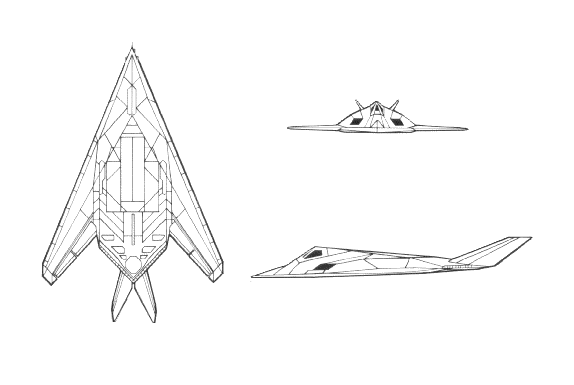
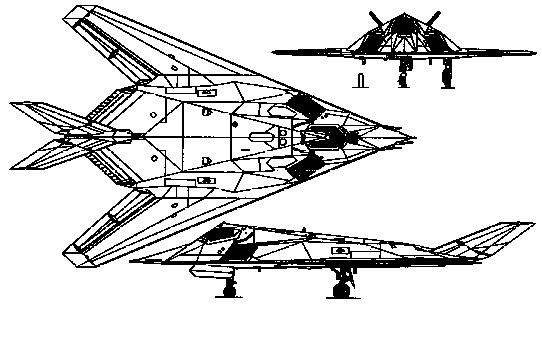
Some of the materials used require special and costly maintenance. The maneuverability of an aircraft can be compromised by the introduction of stealth design features. As was the case with the F-117A.

The wavelength of infrared that FLIRs detects differs from that of night vision, which operates in the visible light and near infrared ranges (0.4 to 1.0 micrometres). Stealth aircraft may rely on an airborne laser radar, although such a sensor may prove of limited utility in bad weather. There are limits to the utility of stealth techniques. Since the radar cross-section (RCS) ( radar cross section is the measure of a target’s ability to reflect radar signals in the direction of the radar receiver) of an aircraft depends on the angle from which it is viewed.

Stealth aircraft are designed to minimize their frontal RCS. But it is not possible to contour the surface of an aircraft to reduce the RCS equally in all directions, and reductions in the frontal RCS may lead to a larger RCS from above. Thus while a stealth aircraft may be difficult to track when it is flying toward a ground-based radar or another aircraft at the same altitude, a high-altitude airborne radar or a space-based radar may have an easier time tracking it. Another limitation of stealth aircraft is their vulnerability to detection by bi-static radars.


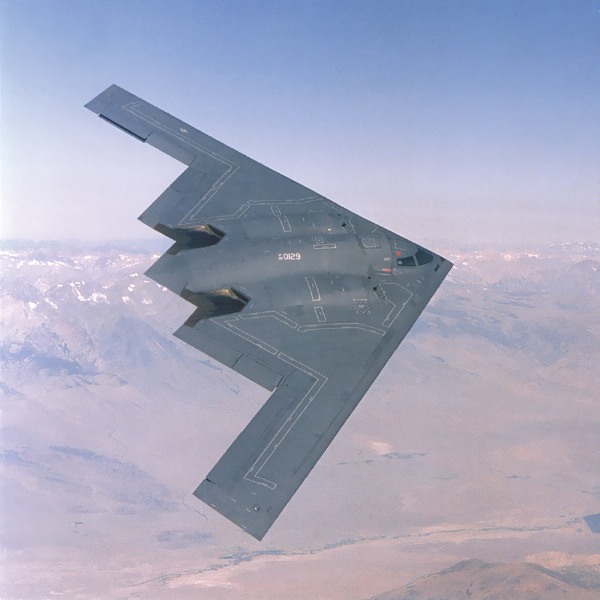
ATB (Advanced Technology Bomber)- B-2 — The Stealth Bomber project was first announced in 1980. In November 1988, the B-2 has been the focus of criticism of the growing cost of the program/project.

The B-2 will be the most expensive aircraft ever procured!
Acoustic Detection
How owls developed stealth technology !!!?
The owl's wing is broad and rounded compared to that of other birds, which makes for less flapping, and a quieter ride through the air. That reduces some sound, but an owl is quiet even compared to other birds when they glide. It's more than just a difference in wing measurements. It's the fact that owls are fully upholstered in order to maintain silence.

The inside of music studios, concert halls and movie theaters is covered with blocks of fabric. These muffle sound and prevent echoing. An owl's hard surfaces, specifically its legs and feet, are covered with soft feathered that muffle noise.
It's the wing feathers that are really counter intuitive, though. Most people, when designing something that makes little noise, will make it as sleek and rounded as possible. That turns out to be a mistake. A sleek, streamlined thing won't have any extra parts banging off each other or creaking in the wind. As we've seen before, though, it will have turbulence. Turbulence is moving air and moving air makes noise.
On the front of the owl's wing are feathers shaped like combs. The teeth of the combs lined the leading edge of the wing, and like the bumps on a whale's flukes, break up the stream of air moving over the wing. At the other side of the wing, the feathering is uneven, creating a fringe-like back edge. The combination takes the air that would all splash off the wing at the same time, and instead lets it out in isolated dribbles.

The result? Evolutionary advantage. Silent death. The ninjas of the animal world. All kinds of ancient myths. Supernatural mystery. And David Bowie. I don't know how the last one fits in, either.
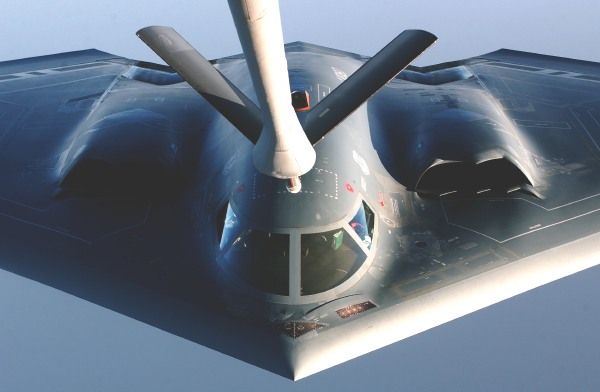
B-2 Stealth Bomber
Currently in action in Libya, we take a look at how this formidable member of the United States Air Force works
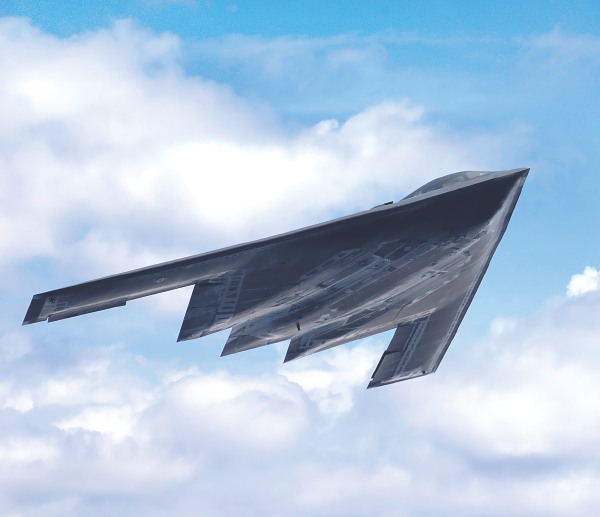
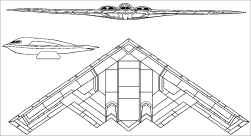
The ‘flying wing’ shaped Stealth Bomber (nicknamed ‘Spirit’) is a unique aircraft that’s designed to make it as invisible as possible. Its shape means there are very few leading edges for radar to reflect from, reducing its signature dramatically. This is further enhanced by the composite materials from which the aircraft is constructed and the coatings on its surface. These are so successful that despite having a 172-foot wingspan, the B-2’s radar signature is an astounding 0.1 square metres.
The B-2’s stealth capabilities, and aerodynamic shape, are further enhanced by the fact its engines are buried inside the wing. This means the induction fans at the front of the engines are concealed while the engine exhaust is minimised. As a result, the B-2’s thermal signature is kept to the bare minimum, making it harder for thermal sensors to detect the bomber as well as lowering the aircraft’s acoustic footprint.
The design also means the B-2 is both highly aerodynamic and fuel efficient. The B-2’s maximum range is 6,000 nautical miles and as a result the aircraft has often been used for long-range missions, some lasting 30 hours and in one case, 50. The B-2 is so highly automated that it’s possible for a single crew member to fl y while the other sleeps, uses the lavatory or prepares a hot meal and this combination of range and versatility has meant the aircraft has been used to research sleep cycles to improve crew performance on long-range missions. Despite this, the aircraft’s success comes with a hefty price tag. Each B-2 costs $737 million and must be kept in a climate-controlled hangar to make sure the stealth materials remain intact. These problems aside though, the Spirit is an astonishing aircraft, even if, chances are, you won’t see one unless the pilots want you to…
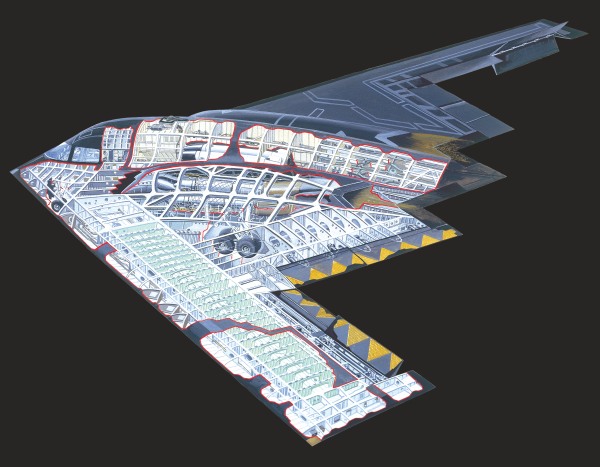
Inside the SpiritThe B-2 is an unusual combination of complexity and elegance, the entire airframe built around the concept of stealth and focused on making the aircraft as hard to detect as possible.
Windows
The B-2′s windows have a fine wire mesh built into them, designed to scatter radar.
Composite materials
Any radar returns are reduced by the composite materials used, which further deflect any signals.
Carbon-reinforced plastic
Special heat-resistant material near the exhausts mean the airframe absorbs very little heat.
Rotary launch assembly (RLA)
The RLA allows the B-2 to deploy different weapons in quick succession.
Bomb rack assembly (BRA)
The bomb rack assembly can hold up to eighty 500lb bombs.
Air Intakes
To further reduce the B-2′s signature, the engine intakes are sunk into the main body.
Landing gear doors
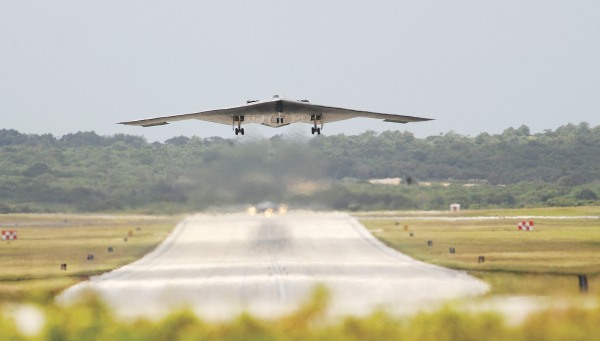
The landing gear doors are hexagonal to further break up the B-2′s radar profile.
Crew compartment
The B-2 carries two crew, a pilot and a mission commander with room for a third if needed.
Flying wing
The B-2′s shape means it has very few leading edges, making it harder to detect on radar.
Fly-by-wire
The B-2′s unique shape makes it unstable, and it relies on a computer to stabilize it and keep it flying.
Engines
The B-2′s four General Electric F118s don’t have afterburners as the heat these generate would make the aircraft easier to detect. (IR signature)
The Statistics
Manufacturer
Northrop Grumman
Armament