الـ MD5 عادة نستخدمه بشكل متكرر لذلك علينا فهمه بشكل جيد لمعرفة ماهو و ما هي امكاناته و حدوده و لتحديد استخداماته و قد لاحظت بأن ماهية هذا النظام مازالت مجهولة لدى الكثيرين؟
أول سؤال قد يتبادر إلى الذهن ما هي الـ MD5؟ MD5 [Message Digest Algorithm 5] الـ MD5 هي علاقة رياضية Hash algorithm لتوليد رقم بحيث يكون عبارة عن توقيع لهذه البيانات أي أنه ليس تشكيل آخر البيانات و ليس تشفيراً للبيانات أي عندما نستخدم دالة الـ MD5 على String فإننا لا نشفر الـ String بل نأخذ توقيعاً إلكترونياً له والأمر شبيه بالـ CRC و لهذا السبب فالناتج هو رقم له طول ثابت 128 بت و هذا الرقم يتم إظهاره بهيئة الـ HEX فيصبح طول بيانات الخرج 32 محرف لأن الرقم الأصلي يشغل حجم 16 بايت . MD5 check Used Is MD5 Checksum MD5 تم تصميمها عام 1991 بعد الهاش MD4 مبتكر هذا النظام (MD5) شركة RSA Data Security .
SHA-256 [Secure Hash Algorithm] ما تم تطويره مؤخرا SHA-256 وهي خوارزمية رياضية مشفرة بطول 256بت..وهناك أخرى متطورة مثل SHA-512 و SHA-384 في العام 2010 تم الاعتماد على الهاشSHA-2 وعائلته وذلك لتقارير أمنية تفيد أنه تم كسر حماية ال MD5 وأصبح بالإمكان إنتاج برنامجين بنفس MD5 وقد أصدر قسم الأمن القومي الأمريكي بيانا يقول فيه أن الهاش MD5 تم كسره ولم يعد آمنا.. طيب مازال هذا عبارة عن توقيع فهل من الممكن أن نحصل على البيانات من الـ MD5؟ أحياناً لكن نظام الـ MD5 بالأصل قد تم إنشاؤه فقط لإضافة توقيع إلكتروني للملفات الكبيرة أو للملفات المشفرة و عندما كان نظام الـ MD4 كانت معادلته بسيطة و بالتالي عمله أسرع و بالتالي تكبر إمكانية تعرضه لـ Force Attack فابتكرو نظام الـ MD5 لجعله أبطأ نوعاً ما و أأمن من سابقه. MD2 was optimized for 8-bit machines كيف تتم عملية الحصول على البيانات من الـ MD5؟ بعملية الـ Brute Force Attack أي بالتجريب و مطابقة النتائج يعني بيبدأ بيحسب الأحتمالات و الأمكانات و بيجرب يطلع قيمة الـ MD5 له فإن تطابقت مع المطلوب فهي الباسوورد فمثلاً بيبدأ ياخذ الـ MD5 للـ a ثم للـ b و هكذا... لكن من الممكن وجود عدد من الباسووردات لها نفس الـ MD5 و شي ثاني إذا كانت الباسوورد طويلة كفاية فستتطلب وقت كبير جداً لحلها.
ما الطريقة لحماية الباسوورد من أن تكون مكشوفة للعيان؟ بكل بساطة اعمل: Md5(MD5($Password);X أو عمل MD5 للبيانات بعد أخذ الـ CRC لها مثل md5(crc32($Password));X و بهذا إن كانت الباسوورد طولها محرف واحد فبأخذ الـ MD5 الأول لها ستعطي ناتج ذو 32 حرفاً و هذا الأخير نعمل له MD5 بهذا سيكون من المستحيل تماماً الوصول للباسوورد إذاً فالغاية من عمل ذلك مرتين هو لحماية الباسووردات القصيرة من الاختراق و لتأمين حماية مضاعفة. (الـ X لتلافي قلب النص في الـ Right-to-left)
هل يمكن استعادة كلمة بالعربي من الـ MD5 ؟ نعم لكن البرنامج الذي يقوم بهذه العملية مازال غير موجود مع أنه من الممكن برمجته و بسهولة ولو كان ذو فائدة و استخدام لوجد من زمان.
و الأن ناتي إلى الشرح المفصل
حتى قرب الموضوع أكثر، كلنا بيشتغل على الـ Winzip! و كلنا لاحظ بأنه عندما يتغير أي بايت في الملف راح يحس البرنامج على هذا التغيير و يرسل رسالة خطأ بأن الملف تالف! هل تعلم كيف يتم ذلك؟ يستخدم الـ Winzip مايسمى بالـ CRC ليتحقق من صحة البيانات إذ يوجد في الملف رقم تم حسابه من بيانات الملف و عند تشغيل البرنامج يقوم البرنامج بحساب الـ CRC و مقارنتها مع القيمة الموجودة في الملف . أغلب البرامج تستخدمها و حتى ما نروح بعيد فبروتوكول الـ TCP يستخدمها في الـ HEADER للتحقق من سلامة البيانات و الهدر يسمى CRC check .
طيب ياترى ألا تجدوا بأنه من المنطقي وجود قيمتين تعطيان نفس قيمة الـ MD5 ؟ نعم و قد يكون هناك عدد كبير من التطابقات. بسبب أن عدد احتمالات قيم الـ MD5 هو 2^128 صحيح أنها قيمة كبيرة جداً جداً جداً و لكن احتمالات البيانات بشكل عام لانهائي.
الموضوع عبارة عن شرح لفكرة تمكنك من معرفة دقة ملف معين حتى تتأكد من أنك تستخدم الملف الصحيح 100%، و هذا مفيد مثلا أثناء تحميلك ملفات كبيرة من الإنترنت حيث أنك ستصاب بالإزدراء والإستياء بعد تحميلك لملف حجمه 650 أو 700 ميجا، هذا إن لم يكن 4.4 جيجا مثلا لتكتشف أن الملف معطوب بعد أن قمت بنسخه على CD أو DVD و حاولت مرارا في تشغيله و لم يعمل. مثال آخر، لو أنك مثلا قمت بتحميل ملف من موقع معين أو شخص ما أعطاك ملف معين و قال لك أن هذا برنامج رائع يجب عليك تجربته، فكيف ستضمن أن الملف هو نفس الملف الأصلي الذي قام مطور البرنامج بطرحه؟ كيف تتأكد من أنه الملف الأصلي و أن هذا الشخص لم يعبث بالملف بطريقة ما ليضيف ثغرة فيه تمكنه من الوصول إلى جهازك؟ MD5 hash هو الحل.
و لتبسيط الشرح سنأخذ مثالا عمليا على ذلك، حسب موقع FreeBSD.org فإن الـ MD5 Checksum الخاص بالقرص الأول من نظام FreeBSD.org 6.2 RELEASE هو على النحو التالي MD5 (6.2-RELEASE-i386-disc1.iso) = 3d27214700687c0b5390e8b6dd3706e3 6.2-RELEASE-i386-disc1.iso هو اسم الملف 3d27214700687c0b5390e8b6dd3706e3 هو المزيج أو الهاش Hash وبالتالي فلو أنك قمت بتحميل الملف و وجدت أن الـ Hash هو مطابق لما هو موجود في الموقع فقد قمت بتحميل الملف على أكمل وجه Bit-by-Bit هل md5 موجود على نظام التشغيل الذي أعمل عليه؟ الحمد لله md5 موجودة على معظم أنظمة التشغيل و منها على سبيل المثال لا الحصر FreeBSD and all other *BSDs, Linux, Mac OS X, M$ Windows, Solaris, HP-UX, AIX and more كيف أستخدم هذه الأداة؟ من خلال سطر الأوامر، نكتب الأمر md5 و من ثم اسم الملف، و هذا مثال من نظام جينتو لينكس md5sum freebsd_security_features.mov
a84f4b7608eaad2a101ff48f6b342e07 freebsd_security_features.mov GUI programs for MD5 Check MD5 Checker
How rainbow crack Work ?
Rainbow Crack Use Data Bases Which Generated by The program ,
The Program Use This Data Bases to Search in to The crypt word (hash) ,
until Find The Same Hash in the Data Base and the Corresponding Word (Decrypted Hash).
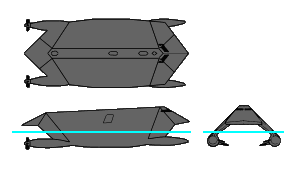
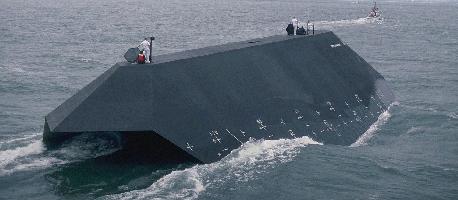
Its purpose is to explore a variety of new technologies for surface ships, including ship control, structures, automation for reduced manning, seakeeping and signature control
.
ted, Radar Reflecting/Absorbing, Hull
USS Zumwalt (DD-21) - DD(X) Class Stealthy Multimission Destroyer, -----
Partial List of Anti-Ship Cruise Missiles (ASCM)
USA AGM-84 Harpoon / Harpoon Block II
France Exocet AM39 / SM39 / MM40 / BC40 AS 15 TT
India/Russia Brahmos (PJ10)
Russia SS-N-27 Klub SS-N-25 Switchblade SS-N-22 Sunburn SS-N-19 Shipwreck
China C-701
Germany AS.34 Kormoran 1/2
EU Polyphem
Norway Penguin NSM
Britain Sea Skua
Sweden RBS 15 Mk3
Italy Otomat Mk2
Israel Gabriel III
.
The Adaptive Water Curtain Technology (AWCT) is intended to deflect and scatter enemy radar waves thus reducing the ship’s radar cross section (RCS). It consists of highly conductive sea water sprayed in a fashion that effectively creates an angled radar reflective curtain around the ship
To reduce the ship’s remaining RCS, the water curtain can be "modulated" such that the returns appear as "Sea Clutter." This could be done by determining the surrounding Sea State--either locally, or from satellite Sea State data, i.e., deriving the Sea Clutter Spectrum; and applying the appropriate coefficients to the modulating process for optimum mimicry
This technology can reduce a surface ship's vulerability to Radar cross-section (RCS), Infrared signature (IR), and Visual signature reduction.
.
-Water Curtain Modulation-
Nozzle Control for 'Sea State' Mimicry
To reduce the ship’s remaining RCS, the water curtain can be "modulated" such that the returns appear as "Sea Clutter." This is done by determining the surrounding Sea State--either locally, or from satellite Sea State data, i.e., deriving the Sea Clutter Spectrum and applying the appropriate coefficients to the modulating process for optimum mimicry
Active Water Curtain TechnologyAWCT
The Adaptive Water Curtain Technology (AWCT) is intended to deflect and scatter enemy radar waves thus reducing the ship’s radar cross section (RCS). It consists of highly conductive sea water sprayed in a fashion that effectively creates an angled radar reflective curtain around the ship.
Water, especially sea water, is highly electrically conductive and if the water droplets are compact enough, RADAR waves will be reflected just as if the surface were metal. Also, streams of sea water will absorb as well scatter radar energy.
The system is adaptive, that is, it monitors each ‘water stream landing zone,’ and by adjusting the appropriate nozzle/monitor/pump combination (including azimuth, elevation, water pressure, spread, modulation, pulsing, etc.), compensates for wind speed and direction - loading
Active Windowing, Rapid Modulation of Pump Nozzles- Creating Dynamic Openings in the Water Curtain Useful when synchronized with Radar and other Sensors.
- Radar Evasion by Shaped Water Curtain-
----------Full Water Curtain----------------------------Stepped/Folded (Fresnel lens)
Arleigh Burke DDG-51 using some Shaped Water Curtains- Active Water Curtain Technology- Array of Powerful Water Pump outlets creating Water Curtain
Illustration of Sea Clutter overlaid by Detection Threshold-
Targets Detected above the Clutter
Linear Nozzle Array-
-Omnidirectional Nozzle Array-
.
Linear Nozzle Array
Array shown with one section in up, or operational, position. The external "central feeder pipe" is an indication of the "add on" nature of the AWCT.
.
End View Diagram
Array shown with one section in up, or operational, position.
Since you can run many applications on your computer at once, and they could all try to print at once, the documents to be printed need to be printed in sequence somehow. Windows handles this by creating what's called the print queue. When an application prints a document it's placed into this queue of documents to be printed. When the printer is ready and available - perhaps after having completed printing a prior document - the next document in the queue ready to be printed is then actually printed.
The print queue is managed by the "Print Spooler" service. (The process of adding a document to the print queue, or sending it to the printer from the print queue is referred to as "spooling", which dates back to days when documents to be printed were written to a spool of magnetic tape and then physically taken to a different device to be printed.)
Here is the solution
Each printer you have available on your system has its own queue. You can view the print queue for each by opening up Control Panel, and going to Printers, or Devices and Printers, and double clicking on the print icon you'll find there. Here's the print queue for my printer :
You can see that the document is "Spooling". If there are multiple documents waiting to be printed they would all be listed.
You can also cancel printing a document if it shows up in the print queue: right click on the document and click on the Cancel option.
Now, it's important to note that Cancel doesn't always work, and that the document actually being printed might not be listed. That's because the spooler is just a stop along the way. Many printers actually have very large buffers of their own and might have already received several pages, if not the entire document, therefore removing it from the Windows print queue often well before the pages are actually printed.
But what about the opposite, which is really what this question is all about? What do you do when the printer should be printing, the print queue shows several documents ready to be printed, and yet ... nothing's happening?
First, check all the "usual" stuff. Is the printer out of paper? Is it complaining about some other kind of fault? (If you look closely at my print queue above the printer is complaining about "No Toner/Ink" since I opened the cover to pause printing.) Is the printer connected and powered on, even? Is there a paper jam?
You get the idea. There are a lot of things that can stop a printer from printing, and nine times out of ten it's one of those issues that gets in the way.
And yet, sometimes not.
An unfortunately common scenario looks like this:
Your printer is confirmed ready to print.
You have documents in the print queue.
Nothing is printing, even though it looks like it should.
Attempting to cancel a print job in the queue does nothing.
Rebooting doesn't help.
The solution is to clear the print queue manually. This is done on the computer to which the printer is connected.
Turn off your printer.
Right click Computer (in the Windows 7 Start Menu) or My Computer (on your desktop), and click Manage.
In the resulting dialog, expand Services and Applications, then click on Services. Scroll down the resulting list to find Print Spooler.
Right click on Print Spooler and click on Properties.
Click on Stop to stop the print spooler. (You can leave this dialog open.)
Now, use Windows Explorer to navigate to the folder c:\Windows\System32\spool\PRINTERS. A quick way to do this is to click on Start then Run and then enter "c:\Windows\System32\spool\PRINTERS" as the item to run.
Delete the contents of this folder.
Back at the Printer Spooler Properties dialog, click on Start.
Turn your printer back on.
Print something.
If your printing problem was related to a stuck printer queue, you should now be able to print again.
1 1.0 Introduction The F/A-22's avionics and software system is the most advanced ever integrated into an aircraft. It is the first aircraft to use integrated avionics, where the weapons management system, electronic warfare system and the AN/APG-77 radar work as one, giving the pilot unprecedented situation awareness.
A joint venture of Northrop Grumman's Electronic Sensors and Systems Division (ESSD) and Raytheon is developing the advanced AN/APG-77 active-element electronically scanned array radar for the F/A-22.
2.0 Capabilities The AN/APG-77 radar is designed for air-superiority and strike operations and features a low observable, active aperture, electronically-scanned array with multi-target, all-weather capability. The radar is key to the F/A-22's integrated avionics and sensor capabilities. It will provide pilots with detailed information about multiple threats before the adversary's radar ever detects the F/A-22. This is also called BVR, or Beyond Visual Range capability.
It will give an F/A-22 pilot the possibility in air-to-air combat, to track, target and shoot at multiple threat aircraft before the adversary's radar ever detects the F/A-22.
It will give an F/A-22 pilot the possibility in air-to-air combat, to track, target and shoot at multiple threat aircraft before the adversary's radar ever detects the F/A-22.
3.0 Technology The F/A-22's AN/APG-77 radar is an active-element, electronically scanned (that is, it does not move) array of around 2000 finger-sized transmitter / receiver modules. Each module weights ca 15g and has a poweroutput of over 4W. The APG-77 is capable of changing the direction, power and shape of the radar beam very rapidly, so it can acquire target data, and in the meantime minimizing the chance that the radar signal is detected or tracked. .
Most of the mechanical parts common to other radars have been eliminated, thus making the radar more reliable.This type of antenna, which is integrated both physically and electromagnetically with the airframe, provides the frequency agility, low radar cross-section, and wide bandwidth necessary to support the F/A-22's air dominance mission.
One requirement that drove all of the ATF designs was a wide field of regard for sensors, enabling the Raptor to acquire and track multiple targets beyond visual range. The requirement called for a 120-degree radar field of regard on each side of the nose.
A forward-looking infrared search and track capability was also desired. Lockheed approached the field-of-regard requirement for the radar with three radar arrays placed in the nose of the aircraft (one facing forward and two facing sideways). Each wing root carried an infrared search and track system that operated through faceted windows.
4.0 Radar Software The avionics software is to be integrated in three blocks, each building on the capability of the previous block. Block 1 is primarily radar capability, but Block 1 does contain more than 50 percent of the avionics suite's full functionality source lines of code (SLOC) and provides end-to-end capability for the sensor-to-pilot data flow
This Block 1 software enables the basic operation of the radar and its initial mode complement, including the simultaneous operation of search and track modes and systems health and maintenance or built-in-test modes. At the Boeing Avionics Integration Laboratory the F/A-22 radar was integrated with the avionics mission software and other aircraft avionics sensors such as the electronic warfare system, and the communications, navigation and information systems.
5.0 Testing By the first quarter of 1998, the radar was delivered to The Boeing Company's F/A-22 Avionics Integration Laboratory in Seattle, Wash., where engineers integrated the radar with other F/A-22 avionics.
Meanwhile, flight testing of a second F/A-22 radar continued aboard a modified Boeing 757 testbed aircraft at ESSD. The test bed consistsed of an F/A-22 forward fuselage installed on the 757's forward pressure bulkhead. Electronic warfare (EW) and communication, navigation and identification (CNI) sensors were mounted directly on the sensor wing, which was designed to simulate the sensor positioning found on the F/A-22's wings. .
The cabin had space for 30 software engineers and technicians who could evaluate avionics and identify anomalies, in real time. A simulated F/A-22 cockpit was installed in the cabin of the Flying Test Bed. It had all primary and secondary F/A-22 displays, as well as the throttle and stick.
The conducted flight tests successfully demonstrated the expected levels of performance of the F/A-22 radar, including basic search and track functions.
OK right i will illustrating the capabilities using this video animated
Introduction Introduction
Continuous developments in military aircraft technology have produced a new sort of defensive weapon: Stealth.
Planes can now fly invisibly into enemy airspace, drop a payload, and fly back out without being detected, identified or attacked.
To meet this goal, an aircraft must be "stealthy" in many areas.
1. It must be very hard to detect on radar.
2. The hot emissions from the engines must be minimal.
3. It must be quiet
4. Its engines should not produce contrails or exhaust smoke in cold atmosphere
5. It should be hard to see with the human eye
Click on the buttons to the left to learn more about the different aspects of Stealth. Find out yourself how planes and especially the F/A-22 can become almost invisible for enemy radar, what does a stealthy airframe look like and what may the future have in store?
Have a good time discovering the secrets of technology!
1.0 Radar technology
Currently the way to detect and even identify aircraft, is the use of radar. This system, invented during world war II, simply works by constantly sending bursts of radio waves of certain frequencies and measure the echo's of each burst.
Parts of the energy of radio waves are being reflected by objects. This can be a plane, but also a cloud or a bird. Depending on the material the object is made of, this echo is stronger or weaker, but there is an echo. By measuring the reflected energy as a function of position and time, computers can calculate what it is that reflects the energy, where it is in 3D space and also in what direction it moves.
To get a proper overview of an area with radar, the transmitting and receiving antenna should rotate in angles of 360 degrees. This is why you always see these rotating antenna's at for instance airports and ships. To protect the antenna's from damage, they are often mounted in a radio wave transparent dome, which you will probably already have seen somewhere.
2.0 Detection techniques
There are a number of causes for planes or other flying objects like missiles, giving away the fact that they are there. Radar or in other cases laser technology enables the searching party to detect the flying object and act upon detection.
2.1 Direct echo's
Once radar waves hit a plane, a part of the radar energy is bounced back to the sending source. The amount of bounced back energy highly depends on the shape of the object and the material it is made of.
The returned echo can be deteced, giving away the position and speed of the object.
2.2 Jet wake
The parameter determining radar return from a jet wake is the ionization present. Return from resistive particles, such as carbon, is seldom a significant factor. The very strong ion-density dependency on maximum gas temperature quickly leads to the conclusion that the radar return from the jet wake of an engine running in dry power is insignificant, while that from an after burning wake could be dominant. 2.3 Heat detection
Another way of detecting if an aircraft is flying somewhere is by measuring the heat it radiates. Normally this heat is produced by the planes engines. There are two significant sources of infrared radiation from air-breathing propulsion systems: hot parts and jet wakes.
By using modern heat image sensors (read InfraRed sensors) the difference can be seen between a flying object itself and the surrounding cold air.
This is the same for the jet engine exhaust gases
The ideal case would be that the plane body and exhaust fumes have the same temperature as the surrounding air, making it blend with its background (seen from the detectors point of view.
Heat detection is often used in missiles which can lock themselves on the hot jet-engine exhaust and thus flying themselves directly into the planes most vital part. The Sidewinder is a good example of such a missile.
2.4 Turbulence detection
Shape also has a lot to do with the `invisibility' of stealth planes. Extreme aerodynamics keep air turbulence to a minimum. Rumors are heard about sophisticated laser controlled turbulence sensors, which can measure paths of disturbed air, generated by an aircraft which just passed.
2.5 Visual detection
Reducing smoke in the exhaust is accomplished by improving the efficiency of the combustion chambers. Getting rid of contrails - the white line in the sky caused by high flying planes - is a harder task however. More about that later.
2.6 Acoustic detection
A very obvious source of detection is the noise, generated by jet engines. Several systems have been designed in the meantime to reduce the sound of jet engine exhausts to a minimum, making them harder to detect by just measuring sound waves. But often it is already too late if you can hear the plane...
1.0 How to get Stealthy 1.1 Ingredients of Stealth technology
To make a stealthy aircraft, designers had to consider five key ingredients:
- reducing the imprint on radar screens / stifling radio transmissions
- turning down the heat of its infrared picture
- Improve aerodynamics
- making the plane less visible.
- muffling noise
To understand more about each ingredient, here is some theory first.
1.2 Radar Cross section (RCS)
The first goal is to cut down the size of the aircraft's radar image, called its "radar cross section," or RCS. This normally involves using radical design features and some nonmetallic materials.
A conventional fighter aircraft has an Radar Cross Section (RCS) in the region of 6 square metres. The much larger B-2B bomber, using the latest stealth technology, displays an RCS of only 0.75 square metres. By comparison, a bird in flight displays an RCS of 0.01 square metres.
Stealth plane designers have to take in account that the used materials (for instance composites) may not be transparant to radar, but they are also not completely reflective. In other words, the parts behind the skin of the plane may be invisible for the eye, but they are not for radar waves, thus causing echos.
2.0 Getting invisible
This section explains more about what radar echos look like and how they can be prevented to reach the radar receiver again after hitting the plane.
2.1 Echo scattering
Curving surfaces on conventional aerodynamic bodies act as scatterers, reflecting radar waves from any angle and giving the radar operator a clear signal. The right-angled surfaces at the wing and tail roots also reflect radar signals straight back to their source.
Scintillation is a measure of how rapidly the size of the return varies with the angle. The greater this variation, the more difficult a target is to track. The lower the number of lobes and the narrower the lobes, the lower the probability of detecting any return.
Panels on planes are angled so that radar is scattered and no signal goes back to base.
The F-117 airframe for instance has a large number of faceted surfaces, not unlike a crystal.
The facets are presumed to reflect radar energy away from the aircraft in any other direction than that of the radar emitter.
A flat plate at right angles to an impinging radar wave has a very large radar signal, and a cavity, similarly located, also has a large return. Thus the inlet and exhaust systems of a jet aircraft would be expected to be dominant contributors to radar cross section in the nose-on and tall-on viewing directions, and the vertical tail dominates the side-on signature.
2.2 Radar absorbtion
A second way of stopping radar reflections is by coating the plane with material that soaks up radar energy.
These typically consist of carbon, carbon fibre componsites, or magnetic ferrite-based substance.
The result is that for instance the B-2 is reported to have the same RCS as a child's tricycle!
Flight-control surface can be made from honeycombed materials which reflect incoming radar waves internally rather than back to the radar. Radar-absorbing coatings can be applied to the surface of the body which effectively drain the energy of the radar signal.
Flight-control surface can be made from honeycombed materials which reflect incoming radar waves internally rather than back to the radar. Radar-absorbing coatings can be applied to the surface of the body which effectively drain the energy of the radar signal.
2.3 Echo cancellation
The key dimension of a quarter wavelength can vary in practice from millimeter to one meter. Although the coating designer will frequently try to use materials whose dielectric constant varies in a way that maintains a constant wavelength independent of frequency, the reality is that a number of different coatings and absorbers are needed to cover the required bandwidth.
Imagine a low frequency absorber that might be made of glass fiber hex-cell material. Its resistance is graded from front to back so that the edge is initially electro-magnetically soft and gradually becomes more attenuating as the wave passes through. This approach is particularly taken when, for practical reasons, the layer cannot be as deep as a quarter wavelength. The inner absorber is covered by a high-frequency ferromagnetic coating, which completes the frequency coverage.
Metal components such as the engine, which produce significant radar reflections, can be shielded using a metal and plastic sandwich whose layers are spaced in such a way as to create a standing wave, cancelling out any radar reflections.
3.0 Heat radiation reduction
Infrared radiation (heat) should be minimized by a combination of temperature reduction and masking, although there is no point in doing these past the point where the hot parts are no longer the dominant terms in the radiation equation. The main body of the airplane has its own radiation, heavily dependent on speed and altitude, and the jet plume can be a most significant factor, particularly in afterburning operation.
The jet-wake radiation follows the same laws as the engine hot parts. Various ways have been developed and tested to cool down the engine exhaust gasses. The ilustration above shows how the hot exhaust gasses can be surrounded by cooler air, significantly reducing the IR signature of the plane.
Air has a very low emissivity, carbon particles have a high broadband emissivity, and water vapor emits in very specific bands. Infrared seekers have mixed feelings about water-vapor wavelengths, because, while they help in locating jet plumes, they hinder in terms of the general attenuation due to moisture content in the atmosphere. There is no reason, however, why smart seekers shouldn't be able to make an instant decision about whether conditions were favorable for using water-vapor bands for detection.
4.0 Turbulence reduction
By optimizing the aerodynamics of the stealth plane, the for the eye invisible turbulence trail in the air, can be kept to a minimum. This way it becomes harder for the very special laser equipment to detect the trail and trace it back all the way to the plane which created it.
5.0 Visual detection reduction 5.1 Hiding smoke contrails (jet wake)
Reducing smoke in the exhaust is accomplished by improving the efficiency of the combustion chambers. Getting rid of contrails - that distinct white line in the sky caused by high flying jets - is a harder task.
Tests have been done using exotic chemicals to be inserted into the engine outlet gases to modify infrared signature as well as to force water molecules in the exhaust plume to break up into much finer particles, thus reduce or even eliminate contrails. One of the chemical used for this was chloro-fluoro-sulphonic acid. Several other acids were tested too, but the result was that the chemicals were too corrosive and the system was waved.
5.2 Low visibility
An aircraft at low to medium altitudes tends to be a black dot against the background of the sky. To avoid this, the plane a given a special medium gray color.
The gray, when combined with light scattering at low to medium altitudes ensures about as low observability as can be possible, or a reduction to 30% in visibility.
5.3 Low level flight
Another technique used by aircraft to avoid radar is to fly at very low levels where there is a great deal of 'ground clutter' ... radar reflections given off by buildings and other objects. Low-level aircraft can go undetected by most radar systems.
The latest ground-defence systems however are designed to discriminate between ground-clutter and hostile planes. In addition, ground-clutter is partly avoided by using 'look down' radar systems, which track aircraft from other aircraft flying above.
1.0 Stealth features of the F/A-22
Taking a look at the F/A-22, quickly reveals the fundamental principles of a stealthy design as discussed earlier.
2.0 Continuous curves
The F/A-22 uses a combination of different ways to keep radar waves from bouncing back to their origin. The most sophisticated system is the use of so-called continuous curvature.
Many of of the surface shapes of the F/A-22 are curves with constantly changing radii. These scatter radar beams in all directions instead of back to the radar source. There are no right angles on the exterior of the design.
In order to calculate the curves and the effect they have on radar reflections form any point in 3D space, requires a tremendous computing power.
The first plane using this technology extensively is the B-2 stealth bomber, also known as the flying wing.
Since computer- and software development has sky-rocketed over the past 20 years, prediction models can now be calculated quite precisely ,taking in account radar reflection versus the shape of the plane, while supporting more naturally aerodynamic shapes.
3.0 Planform alignment
The second way to keep radar waves from returning to the sending antenna, the leading and trailing edges of the wing and tail have identical sweep angles (a design technique called planform alignment).
The fuselage and canopy have sloping sides. The vertical tails are canted. The engine face is deeply hidden by a serpentine inlet duct and weapons are carried internally.
4.0 Saw-toothed edges
The F/A-22 has a low height triangle appearance from the front. This physical cross sectional view ensures a small signature from the front and low observability touches such as paint and materials, as well as little "W" shapes where straight lines might have appeared, all tend to break up the signature by absorption or redirection.
The "W" shapes are found at numerous places on the stealth aircraft. For instance, in the forefront of the cockpit glass, there is a very apparent "W" shape. This reduces the radar energy reflected during a head-on pass to the radar emitter. The "W" shape is also found on landing gear doors, engine inlets and outlets, as well as other openings.
5.0 Engine nozzles
Reduction of radar cross section of nozzles is also very important, and is complicated by high material temperatures.
The approach taken at Lockheed is to use ceramic materials.
The ceramics may be either lightweight, parasitic sheets mounted on conventional nozzle structures or heavier structural materials forming saw-toothed edges.
6.0 Cockpit
The pilot's head, complete with helmet, is a major source of radar return. This effect is amplified by the returns of internal bulkheads and frame members. The solution is to design the cockpit so that its external shape conforms to good low radar cross section design rules, and then plate the glass with a film similar to that used for temperature control in commercial buildings. Here, the requirements are more stringent: it should pass at least 85% of the visible energy and reflect essentially all of the radar energy. At the same time, one would prefer not to have noticeable instrument-panel reflection during night flying.
7.0 Antennas
On-board antennas and radar systems are a major potential source of high radar visibility for two reasons. One is that it is obviously difficult to hide something that is designed to transmit with very high efficiency, so the so-called in-band radar cross section is liable to be significant. The other is that even if this problem is solved satisfactorily, the energy emitted by these systems can normally be readily detected. The work being done to reduce these signatures is classified.
8.0 Paint scheme
In order to make the F/A-22 disappear for the human eye on the ground, when in flight, special camouflage schemes have been developed. This way the plane will blend with the background sky as much as possible viewed from the bottom and disappear in the ground texture when seen from above.
.
The future of Stealth
Imagine you can electronically change the color of a given surface in such a way it can match the terrain below it. Looking from above, the surface appears to match the terrain. Fly over forest, and the surface takes on a green like hue. A cloudy day, add clouds to match what sensors see underneath and the aircraft becomes a chameleon and disappears.
.
This may sound like Science Fiction, but then think of the LCD display of notebooks and it may not seem so far fetched all of a sudden. Recent breakthroughs in chemical polymer technology have made it possible to create polymer (plastic) color displays. In other words, mold the polymer in any shape you like and with the additional control electronics you can make it virtually invisible from any point of view.
You can try it yourself with your own computer. Take a look at this website, containing a tutorial on how to make your computer screen transparent, which of course is just an illusion...
This is not a new idea, in fact several military fiction writers have already come up with the idea, in one particular instance having the aircraft continually modifying top and bottom like a magician's mirror box making the aircraft totally invisible.
More technologies are currently under development and will be closely monitored to be found here. But likewise the F-117, we may not hear about that until the first smart-bomb coming out of nowhere has made a successful hit!
متعة الحياة أن تعمل عملا لم يسبقك إليه أحد ولم يتوقعه الآخرون.................. Its just another way to unlock ur potential representing my internists with other.
By sniffing the web u might see several info.,instructions and details.
here i collect similar and simplify them to u,
cutting out from my time, efforts even i create my unique posts





 Since computer- and software development has sky-rocketed over the past 20 years, prediction models can now be calculated quite precisely ,taking in account radar reflection versus the shape of the plane, while supporting more naturally aerodynamic shapes.


